OPINION: To fix Europe’s food system, start with the school lunch
 Tomas Kauer
 BRUSSELS — In the corridors of Brussels, policymakers endlessly debate the intricacies of the Vision for Agriculture and Food, the urgency of the European Child Guarantee and the future of the Common Agricultural Policy. Yet the place where these high-level strategies actually collide, and succeed or fail, is likely the noisiest room in any building: the school canteen.
This week, as we mark International School Meals Day, we need to stop treating school food as a mere logistical cost or a side dish to education. Instead, we must recognize it for what it is: the single most powerful but under-utilized lever for systemic change.
Beyond the plate: a systemic warning
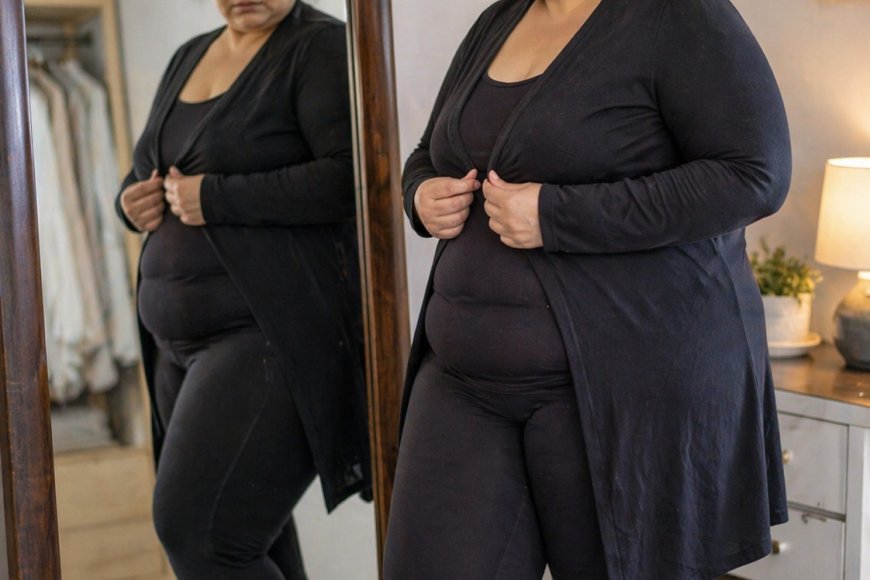
The statistics are sobering. Today, one in four European adolescents is overweight or obese, according to the World Health Organization. This is not merely a matter of individual choice or poverty. This trend is driven by a food landscape where ultra-processed, low-nutrient options have become the most accessible and affordable default for almost every family, regardless of socio-economic background. For many children, school meals are the only reliable window of high-quality nutrition in a day otherwise dominated by a broken food system. On the production side, our farmers are protesting for fair incomes, while the climate crisis demands a shift to sustainable food systems.
It sounds like an impossible knot to untie. But for the past three years, a growing revolution has been taking place in close to 4,000 schools across 22 European countries, reaching over one million children.
For many children, school meals are the only reliable window of high-quality nutrition in a day otherwise dominated by a broken food system.
Through the EU-funded initiative SchoolFood4Change (SF4C), cities and schools have gone far beyond updating their menus; they have dismantled the old model entirely. While thousands have begun transforming how food is sourced, prepared and valued, more than 850 schools have taken the leap even further by fully implementing the Whole School Food Approach (WSFA). The results, published by Rikolto in a new report this week, offer a blueprint for an EU-wide roll-out of the model.
“Evidence proves the framework works, yet we are currently hitting a bureaucratic ceiling,” explains Amalia Ochoa, head of sustainable food systems at ICLEI Europe and coordinator of SF4C. “Healthy school meals combined with food education represent the most accessible pathway to food system transformation, directly benefiting the 93 million children and young people across Europe. By aligning existing initiatives under a coherent framework, the EU can deliver on its promises to public health and both economic and environmental sustainability in one integrated approach.”
Breaking the silos
The WSFA works because it shifts the focus from the individual plate to the entire ecosystem. It recognizes that school meals are not an isolated education cost, but a powerful crossroads where public health, regional economics and environmental policy meet.

The approach integrates four pillars: meaningful policy leadership; sustainable procurement (favoring local and organic); hands-on education (gardening and cooking); and community partnership. When procurement is aligned with regional sustainability goals, magic happens. Children understand the value of food, waste less and local farmers gain a stable, predictable market, shielding them from global market volatility, while simultaneously lowering the long-term healthcare costs associated with diet-related diseases.
The missing ingredient: it’s not just the food, it’s the people
However, the report reveals a critical bottleneck. The biggest barrier to scaling this success isn’t necessarily the cost of the ingredients; it is the lack of dedicated coordination.
School meals are not an isolated education cost, but a powerful crossroads where public health, regional economics and environmental policy meet.
Transformation requires human power. It needs local coordinators who can navigate the labyrinth between a city’s health department, the procurement office and the school board. Too often, we fund the infrastructure but forget the implementation. For the WSFA to become an EU-wide standard, national and regional authorities need to move beyond project-based thinking. It’s not just another subsidy; it’s a strategic investment in Europe’s social and ecological resilience. As Thibault Geerardyn, director at Rikolto Europe, notes in the report:“The true obstacle to scaling up is institutional, not ideological. Changes in policy must be embedded in the current system, not merely added to it as a ‘nice to have’ project.”
The mandate for change: a strategic imperative
As the EU begins implementing its new mandate, school food offers a rare ‘triple dividend’ that hits every major political target on the Brussels agenda. It serves as a public health shield, a guaranteed market for local farmers and a tangible safety net for the European Child Guarantee.
Systemic change cannot be led by temporary staff or volunteers. The EU can make the difference.
However, this potential remains locked as long as school food is treated as a secondary concern. Systemic change cannot be led by temporary staff or volunteers. The EU can make the difference. We call on the European Parliament and Commission to:
- Standardize quality: establish an EU-wide minimum standard of healthy school food and education to drive quality upwards across all member states.
- Fund the coordinators: move away from short-term grants toward long-term strategic investment in the permanent operational implementation and coordination needed to guide schools through this transition. You cannot build a resilient system on temporary project cycles.
- Connect the dots: create an interdepartmental taskforce. School food is currently a political orphan, sitting awkwardly between agricultural, health, youth and social policies. It needs a permanent home in the EU institutions and a unified strategy.
The revolution is on the menu. We have the recipe. We have the evidence from more than 850 schools. Now, what’s needed is the political courage to serve it.
Read the full evidence-based report here: “From Pilots to Policy: Evidence from Three Years of Implementing the Whole School Food Approach in Europe.”
This article has been published with funding from the European Union’s Horizon 2020 research and innovation program under grant agreement No 101036763.
Disclaimer
POLITICAL ADVERTISEMENT
- The sponsor is Rikolto België vzw
- The ultimate controlling entity is Rikolto België vzw
- The political advertisement is linked to encouraging change to European policy on food systems with calls to action for EU Institutions. Reference to the Green Deal, the European Child Guarantee, and agricultural reform.
More information here.